
Introduction: Defying Gravity, Transcending Time
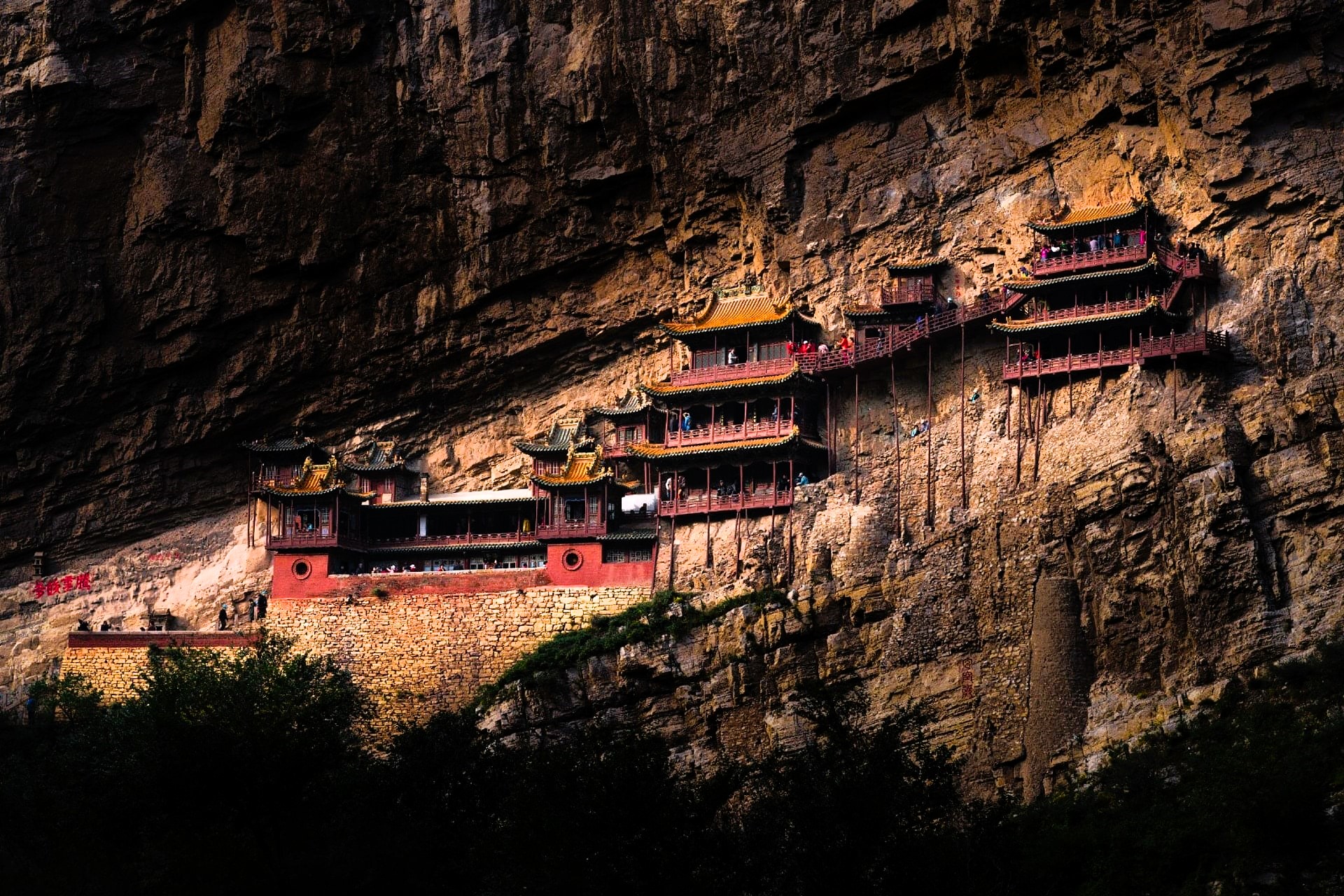
Imagine a temple that appears to float in midair, clinging to a sheer cliff face 75 meters above a rushing river, supported not by massive foundations but by seemingly fragile wooden beams driven into stone. This is not a scene from fantasy—it is the Hengshan Hanging Temple (Xuankong Si 悬空寺), one of China’s most astonishing architectural achievements and a masterpiece of human ingenuity.
Located just 65 kilometers southeast of Datong and approximately 1.5 hours by car from the Jianguo HIDDEN Hotel Flagship Store, this 1,500-year-old miracle offers travelers an unforgettable journey into ancient engineering, spiritual harmony, and breathtaking natural beauty.
For guests staying at Jianguo HIDDEN Hotel at 15th-21st Floors, Northwest Corner of Xingping Street and Hengyuan Road in Pingcheng District, the Hanging Temple represents the perfect day trip destination—accessible yet extraordinary, spiritual yet visually spectacular.
Historical Significance: A Temple Born of Faith and Innovation
Northern Wei Dynasty Origins (AD 491)
The Hengshan Hanging Temple was constructed in AD 491 during the Northern Wei Dynasty, a period of profound cultural exchange and religious development in Chinese history. According to legend, the temple was built by a monk named Liao Ran, who sought to create a sanctuary that would be “neither too high to fear the heavens, nor too low to fear the earth, nor too exposed to fear the elements.”
This philosophical vision manifested in an architectural marvel that has withstood earthquakes, storms, and centuries of weathering—testament to both spiritual devotion and engineering brilliance.
UNESCO Tentative List Recognition
While not yet inscribed as a World Heritage Site, the Hanging Temple has been included on China’s UNESCO Tentative List, recognized for its:
- Outstanding example of ancient Chinese cliff-side architecture
- Unique integration of three major Chinese philosophical traditions
- Exceptional preservation of Northern Wei construction techniques
- Harmonious relationship between human creation and natural landscape
Architectural Marvel: How Does It Stay Up?
The Engineering Genius
The Hanging Temple’s survival for over 1,500 years defies conventional understanding. Here’s how it works:
1. The “Flying Beam” Foundation
Rather than resting on the cliff surface, the temple’s primary support comes from oak beams drilled deep into horizontally chiseled holes in the rock face. These beams:
- Extend 2-3 meters into the sandstone cliff
- Are treated with桐油 (tung oil) to resist rot and insects
- Distribute weight across multiple anchor points
- Allow slight flexibility during seismic activity
2. The Leveraged Structure
The temple employs ancient Chinese lever principles:
- Crossbeams act as cantilevers supporting upper floors
- Wooden brackets (dougong 斗拱) distribute loads efficiently
- The cliff itself provides natural wind protection
- The temple’s narrow profile minimizes wind resistance
3. Strategic Cliff Selection
Builders chose this specific location for critical reasons:
- Overhanging cliff lip shields the temple from rain and direct sunlight
- South-facing orientation maximizes natural light while minimizing weathering
- Solid sandstone composition provides stable anchoring points
- Elevation above flood level protects from Jinlong River surges
Structural Layout
| Section | Height Above Ground | Primary Function |
|---|---|---|
| Lower Pavilion | ~50 meters | Entrance, Buddhist halls |
| Middle Corridor | ~60 meters | Connecting walkways, Taoist shrines |
| Upper Pavilion | ~75 meters | Confucian study, meditation spaces |
| Total Length | 30 meters along cliff | 40+ rooms and halls |
The entire complex spans approximately 30 meters horizontally along the cliff face, with narrow wooden walkways connecting pavilions that house statues, altars, and sacred texts.
Three Religions Under One Roof: A Unique Spiritual Synthesis
Buddhism, Taoism, and Confucianism United
What makes Xuankong Si truly extraordinary is its role as China’s only temple to formally enshrine all three major philosophical and religious traditions of Chinese culture:
Buddhist Elements
- Sakyamuni Buddha statue in the main hall
- Guanyin (Avalokiteśvara) shrine for compassion
- Arhat statues representing enlightened disciples
- Buddhist sutras and ritual implements
Taoist Elements
- Laozi (Lao Tzu) statue honoring the founder of Taoism
- Eight Trigrams (Bagua) symbols representing cosmic balance
- Altars for celestial deities and immortals
- Taoist meditation spaces emphasizing harmony with nature
Confucian Elements
- Confucius statue celebrating wisdom and ethical conduct
- Calligraphy scrolls featuring classical teachings
- Study areas for scholarly reflection
- Emphasis on filial piety and social harmony
Why This Syncretism Matters
The Hanging Temple’s tri-religious design reflects a pivotal moment in Chinese intellectual history when:
- The Northern Wei court promoted religious tolerance
- Scholars sought to reconcile philosophical differences
- Spiritual practices emphasized complementary rather than competing truths
- Architecture became a physical manifestation of ideological unity
Visitors today experience this harmony firsthand, walking through halls where Buddhist chants, Taoist incense, and Confucian maxims coexist in peaceful dialogue.
Planning Your Visit from Jianguo HIDDEN Hotel
Why Choose Jianguo HIDDEN Hotel as Your Base?
The Jianguo HIDDEN Hotel Flagship Store offers exceptional advantages for travelers visiting the Hanging Temple:
✓ Strategic Location: Just 65 km from Xuankong Si, approximately 1.5 hours by car
✓ Modern Comfort: Newly opened in 2023 with 9.5/10 guest rating
✓ Tour Arrangement Services: Expert concierge can book private tours and transportation
✓ Early Departure Support: Breakfast available from 6:30 AM for early starts
✓ Luggage Storage: Store bags for flexible day-trip scheduling
✓ Local Expertise: Staff provide current conditions, weather updates, and insider tips
Hotel Contact Information:
📍 Address: 15th-21st Floors, Northwest Corner of Xingping Street and Hengyuan Road, Pingcheng District, Datong, Shanxi, China
📞 Telephone: +86-352-5372888-0
🌐 Website: https://datong-wanda.jianguohiddenhotel.com
Transportation Options: Getting to Xuankong Si
Option 1: Hotel-Arranged Private Tour (Highly Recommended)
Details:
- Duration: 1.5 hours each way
- Vehicle: Comfortable sedan or minivan with English-speaking driver
- Cost: Approximately $99 USD for private day tour (includes temple entry, guide, transportation)
- Benefits:
- Door-to-door service from hotel
- Flexible departure time
- Knowledgeable guide provides historical context
- No navigation stress in rural Shanxi
- Combined itinerary options (Hanging Temple + Mount Hengshan hiking)
Booking: Contact Jianguo HIDDEN Hotel concierge at least 24 hours in advance.
Option 2: Taxi or Ride-Hailing
Details:
- Duration: 1.5-2 hours depending on traffic
- Cost: Approximately 200-300 RMB one way (negotiate round-trip with waiting time)
- Tips:
- Have hotel staff write destination in Chinese: 悬空寺,浑源县
- Confirm driver understands waiting time and return trip
- Bring cash as rural drivers may not accept mobile payments
Option 3: Public Bus
Details:
- Route: Datong Long-Distance Bus Station → Hunyuan County → Xuankong Si shuttle
- Duration: 2.5-3 hours total
- Cost: Approximately 30-50 RMB total
- Frequency: Buses depart Datong every 30-60 minutes (6:00 AM – 5:00 PM)
- Note: Less convenient but budget-friendly; requires transfers and Chinese language skills
Option 4: Rental Car
Details:
- Route: Follow G55 Highway southeast, then provincial roads to Hunyuan County
- Navigation: Use Baidu Maps or Amap (Google Maps less reliable in rural China)
- Parking: Available at temple visitor center (small fee)
- Considerations: Mountain roads require confident driving; signage primarily in Chinese
Ticket Information & Advance Booking
Current Admission Prices (2026)
| Ticket Type | Price (RMB) | Price (USD approx.) | Notes |
|---|---|---|---|
| Adult Entry | 130 RMB | ~$18 USD | Includes temple access |
| Climbing Fee | 100 RMB | ~$14 USD | Required to walk on temple walkways |
| Combined Ticket | 200 RMB | ~$28 USD | Entry + climbing (best value) |
| Student/Senior | 65 RMB | ~$9 USD | With valid ID |
| Children <1.2m | Free | Free | Height-based policy |
Critical: Limited Daily Capacity
⚠️ Important Notice: The Hanging Temple restricts daily visitors to protect the ancient structure. Typically only 200-300 visitors are permitted on the temple walkways per day.
Booking Strategies:
- Reserve through Jianguo HIDDEN Hotel: Concierge can secure tickets 1-3 days in advance
- Online platforms: Use Ctrip, Meituan, or official WeChat mini-program (Chinese interface)
- Early arrival: Arrive at visitor center by 7:30 AM for same-day tickets (risky during peak season)
- Avoid holidays: Chinese national holidays (Golden Week, Spring Festival) sell out weeks ahead
Peak Seasons Requiring Advance Booking:
- April-May (spring blossoms)
- September-October (autumn foliage)
- Chinese New Year (late January-February)
- National Day Golden Week (October 1-7)
Optimal Visiting Times & Strategies
Best Time of Day
Early Morning (7:30 AM – 9:30 AM) ⭐ HIGHLY RECOMMENDED
- Minimal crowds on narrow walkways
- Soft morning light ideal for photography
- Cooler temperatures for cliff-side walking
- Better guide availability and attention
- Peaceful atmosphere for spiritual reflection
Mid-Morning to Early Afternoon (10:00 AM – 2:00 PM)
- Peak visitor hours; expect queues for walkway access
- Brightest natural light for interior photography
- Busiest at photo spots; patience required
- Guided tour groups most active
Late Afternoon (2:30 PM – 4:30 PM)
- Crowds begin to thin
- Warm golden light enhances cliff textures
- Some walkways may close at 5:00 PM
- Good for revisiting favorite viewpoints
Best Season to Visit
| Season | Pros | Cons |
|---|---|---|
| Spring (April-May) | Mild weather, blooming wildflowers, clear skies | Occasional rain; moderate crowds |
| Summer (June-August) | Long daylight hours, lush greenery | Hot, humid; peak tourist season |
| Autumn (September-October) | Perfect temperatures, spectacular foliage, clear air | Popular season; book well in advance |
| Winter (November-March) | Minimal crowds, dramatic snow scenery, lower prices | Cold temperatures; some walkways may close for safety |
What to Expect: Inside the Hanging Temple
Visitor Flow & Experience
Step 1: Visitor Center & Museum (30 minutes)
- Purchase tickets and climbing permits
- View exhibits on temple history and construction
- Watch short documentary (Chinese with English subtitles)
- Use restrooms before ascending (limited facilities on temple)
Step 2: Approach Path & Cliff Viewpoint (15 minutes)
- Walk scenic path along Jinlong River
- First breathtaking view of temple clinging to cliff
- Photography opportunity from ground level
- Learn about geological formation of Mount Hengshan
Step 3: Temple Ascent & Walkways (60-90 minutes)
- Climb steep stone steps to temple entrance
- Navigate narrow wooden corridors (some sections single-file)
- Explore Buddhist, Taoist, and Confucian halls
- Pause at viewing platforms for panoramic valley vistas
- Observe ancient statues, carvings, and inscriptions
Step 4: Upper Pavilion & Meditation Spaces (20 minutes)
- Reach highest point (75 meters above ground)
- Experience tranquil Confucian study area
- Enjoy unparalleled views of Hengshan mountain range
- Reflect on temple’s spiritual and architectural significance
Key Highlights Not to Miss
🏯 Main Buddhist Hall: Home to the serene Sakyamuni Buddha statue and intricate wooden carvings
🕊️ Taoist Shrine: Features Laozi statue and Eight Trigrams symbolism
📜 Confucian Study: Calligraphy scrolls and classical texts in peaceful setting
🌉 Connecting Walkways: Experience the thrill of walking on centuries-old wooden planks suspended over the valley
🔭 Viewing Platforms: Capture iconic photos of the temple against the cliff face
🗿 Stone Inscriptions: Ancient poems and dedications carved into cliff walls
Photography Guide: Capturing the Miracle
Best Photography Opportunities
Ground-Level Shots:
- Wide-angle view of entire temple complex against cliff
- Reflection shots in Jinlong River (calm mornings)
- Silhouette of temple at sunrise or sunset
Temple Walkway Shots:
- Interior details of statues and carvings (no flash)
- Wooden beam construction close-ups
- Visitor perspective shots showing scale and height
Panoramic Vistas:
- Valley views from upper pavilion platforms
- Mountain range backdrop with temple foreground
- Seasonal elements: spring blossoms, autumn colors, winter snow
Photography Tips & Restrictions
✓ Permitted:
- Personal photography in most areas
- Tripods allowed in designated zones (not on narrow walkways)
- Drone photography with prior permit (contact temple administration)
✗ Restricted:
- No flash photography inside halls (protects ancient pigments)
- No commercial photography without written permission
- No photography in certain preservation-sensitive zones (clearly marked)
- Respect worshippers; avoid intrusive close-ups
Pro Tips:
- Lens recommendation: Wide-angle (16-35mm) for architecture; prime (50mm) for details
- Settings: Higher ISO for dim interiors; polarizing filter for exterior shots
- Timing: Golden hour (shortly after sunrise or before sunset) for dramatic lighting
- Composition: Include human figures to convey scale of the cliff-side structure
Safety Considerations & Physical Requirements
Important Safety Notes
⚠️ The Hanging Temple involves physical challenges. Please assess your capabilities before visiting:
Physical Requirements:
- Moderate fitness level required for steep stairs and uneven walkways
- Not recommended for visitors with severe vertigo or fear of heights
- Children must be supervised at all times; handrails provided but narrow
- Elderly visitors may find sections challenging; proceed at comfortable pace
Weather-Related Closures:
- Temple may close temporarily during heavy rain, strong winds, or icy conditions
- Check weather forecast and confirm with hotel concierge before departure
- Winter visits require warm, non-slip footwear
On-Site Safety Measures:
- Maximum occupancy limits on walkways (staff monitor flow)
- Regular structural inspections and maintenance
- Emergency protocols and first aid available at visitor center
- Clear signage in Chinese and English for directions and warnings
What to Wear & Bring
Essential Items: ✓ Comfortable, closed-toe walking shoes with good grip (no sandals or heels)
✓ Light jacket or layer (cliff areas can be windy even in summer)
✓ Sun protection: hat, sunglasses, sunscreen
✓ Water bottle (stay hydrated during ascent)
✓ Small backpack for personal items (hands-free for railings)
✓ Camera with wrist strap or neck strap
Optional but Helpful:
- Trekking poles for additional stability (if needed)
- Binoculars for viewing distant mountain details
- Notebook for journaling the experience
- Cash for small purchases (souvenirs, snacks)
Combining Your Visit: Hanging Temple + Mount Hengshan Hiking
Why Combine These Experiences?
Mount Hengshan (恒山), one of China’s Five Great Mountains, offers complementary experiences to the Hanging Temple:
🥾 Natural Beauty: Lush forests, dramatic peaks, and scenic trails
⛩️ Additional Temples: Explore Zhenwu Temple and other sacred sites
🧘 Spiritual Atmosphere: Hiking paths used by pilgrims for centuries
🌅 Panoramic Views: Summit vistas overlooking Shanxi countryside
Suggested Combined Itinerary
Full-Day Adventure from Jianguo HIDDEN Hotel:
| Time | Activity |
|---|---|
| 7:00 AM | Early breakfast at hotel; depart for Hunyuan County |
| 8:30 AM | Arrive at Hanging Temple; enter with pre-booked tickets |
| 8:45 AM – 10:15 AM | Explore Hanging Temple (allow 90 minutes) |
| 10:30 AM | Transfer to Mount Hengshan main entrance (15 minutes) |
| 10:45 AM – 1:00 PM | Hike Mount Hengshan (moderate trail to mid-mountain temples) |
| 1:00 PM | Picnic lunch with mountain views (pack from hotel or purchase locally) |
| 2:00 PM – 3:30 PM | Continue hiking or visit additional temples |
| 4:00 PM | Begin return journey to Datong |
| 5:30 PM | Arrive at Jianguo HIDDEN Hotel; relax or explore Wanda Plaza |
Alternative: Relaxed Half-Day Option
- Focus solely on Hanging Temple with leisurely pace
- Return to hotel by early afternoon for rest or city exploration
- Ideal for families with young children or visitors preferring minimal exertion
Hiking Difficulty Levels
| Trail Section | Difficulty | Distance | Time Required | Highlights |
|---|---|---|---|---|
| Base to Mid-Mountain | Easy-Moderate | 2 km | 45-60 min | Forest paths, small shrines, river views |
| Mid-Mountain to Summit | Moderate-Challenging | 3 km | 1.5-2 hours | Steeper incline, panoramic vistas, main temples |
| Full Summit Circuit | Challenging | 6 km round-trip | 3-4 hours | Complete mountain experience, multiple temples |
Note: Most visitors choose the easy-moderate option to mid-mountain temples, which pairs perfectly with a Hanging Temple visit.
Tour Packages Available Through Jianguo HIDDEN Hotel
Private Day Tour: Hanging Temple + Mount Hengshan
Price: Approximately $99 USD per person (minimum 2 guests)
Includes:
- Private vehicle with English-speaking driver
- Professional local guide specializing in religious history
- All entrance fees and climbing permits
- Bottled water and light snacks
- Hotel pickup and drop-off
- Flexible itinerary customization
Departure Times: 7:00 AM or 8:00 AM daily (subject to weather)
Duration: 8-9 hours total
Group Size: Private tours for 2-6 guests; small group options available
Customizable Add-Ons
✓ Traditional Shanxi Lunch: Authentic local cuisine at countryside restaurant
✓ Tea Ceremony Experience: Sample Hengshan mountain tea with cultural explanation
✓ Photography Focus: Guide with photography expertise for optimal shots
✓ Spiritual Retreat: Extended meditation time and monk interaction (advance arrangement)
✓ Combined Yungang Grottoes: Two-day itinerary including both UNESCO sites
How to Book
- Contact Concierge: Call +86-352-5372888-0 or visit front desk
- Specify Preferences: Group size, interests, physical capabilities, dietary needs
- Confirm Details: Receive itinerary, meeting point, and preparation tips
- Advance Notice: Book at least 24-48 hours ahead; longer during peak season
- Payment: Settle at hotel before departure or include in room charge
Website: https://datong-wanda.jianguohiddenhotel.com for tour descriptions and guest reviews
Frequently Asked Questions (FAQs)
Q: How far is the Hanging Temple from Jianguo HIDDEN Hotel?
A: Approximately 65 kilometers southeast of Datong, about 1.5 hours by car under normal traffic conditions.
Q: Can I visit the Hanging Temple independently without a guide?
A: Yes, independent visits are permitted. However, a knowledgeable guide significantly enhances understanding of the temple’s history, architecture, and religious significance. Jianguo HIDDEN Hotel can arrange English-speaking guides.
Q: Is the Hanging Temple suitable for children?
A: Children are welcome, but parents should assess their child’s comfort with heights and ability to navigate narrow, elevated walkways. Children must be supervised at all times. The experience is most engaging for ages 8+.
Q: Are there restrooms on the temple?
A: Limited restroom facilities are available at the visitor center before ascent. There are no restrooms on the temple walkways themselves. Use facilities before beginning your climb.
Q: Can I bring food and water onto the temple?
A: Small water bottles and light snacks are acceptable. Please dispose of all trash properly. Full meals should be consumed at designated areas before or after your visit.
Q: What if I have mobility issues?
A: The Hanging Temple involves steep stairs and narrow walkways, making it challenging for visitors with significant mobility limitations. The visitor center and ground-level viewpoints are accessible, but temple ascent requires moderate physical ability. Contact the hotel concierge to discuss alternatives.
Q: Is there Wi-Fi at the site?
A: Limited Wi-Fi is available at the visitor center. Download maps, translation apps, and information before departure, as connectivity is unreliable in the mountain area.
Q: What happens if the temple closes due to weather?
A: In case of unsafe conditions (heavy rain, high winds, ice), the temple may close temporarily. Jianguo HIDDEN Hotel concierge can help reschedule your visit or arrange alternative activities in Datong.
Cultural Etiquette & Respectful Visiting
Honoring a Sacred Space
The Hanging Temple remains an active site of spiritual significance. Please observe:
✓ Speak softly in temple halls and meditation areas
✓ Dress modestly: Shoulders and knees covered (respectful attire)
✓ Remove hats when entering shrine interiors
✓ Ask permission before photographing worshippers or monks
✓ Do not touch ancient statues, carvings, or inscriptions
✓ Follow designated paths and respect barrier ropes
✓ Dispose of incense respectfully if participating in rituals
Supporting Preservation
Your visit contributes to ongoing conservation efforts:
- Ticket revenues fund structural maintenance and restoration
- Visitor limits protect the ancient wooden framework
- Respectful behavior minimizes wear on historic surfaces
- Sharing preservation messages amplifies global awareness
Nearby Attractions to Extend Your Journey
Within Hunyuan County
- Mount Hengshan Main Peak – Hiking trails and summit temples
- Zhenwu Temple – Taoist complex with Ming Dynasty architecture
- Hunyuan Ancient Town – Traditional Shanxi streets and local cuisine
- Jinlong River Scenic Area – Riverside walks and photography
Back in Datong (from Jianguo HIDDEN Hotel)
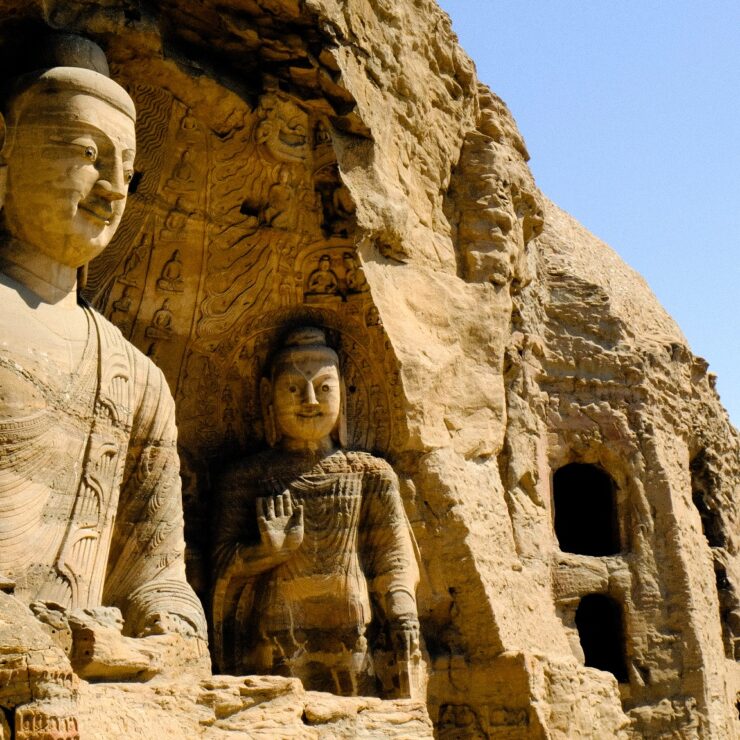
- Yungang Grottoes – UNESCO Buddhist cave complex (17 km west)
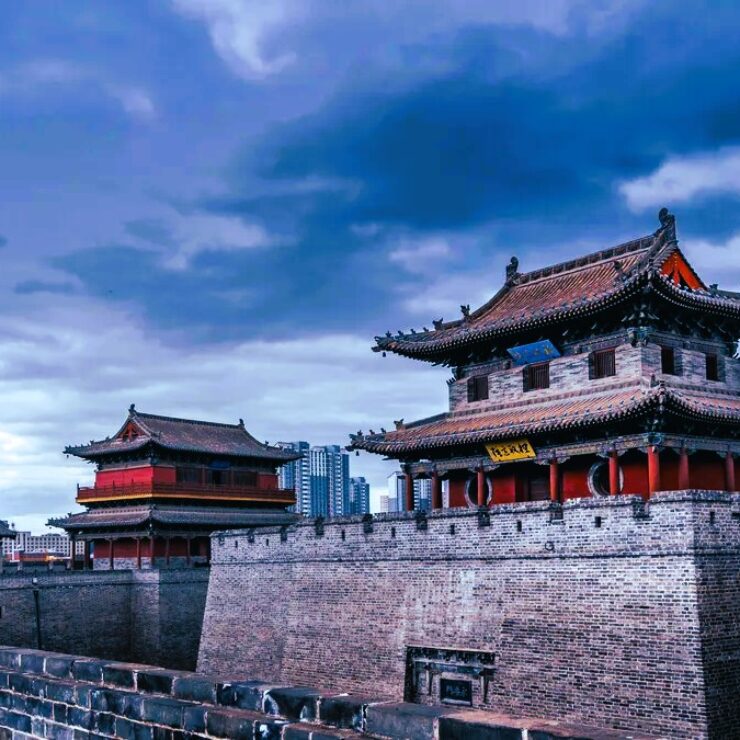
- Datong Ancient City Wall – Ming Dynasty fortifications with city views
- Huayan Temple – One of China’s largest Buddhist temple complexes
- Nine-Dragon Glazed Screen Wall – Colorful Ming Dynasty masterpiece
Sustainable Tourism Practices
How to Visit Responsibly
As a fragile ancient structure, the Hanging Temple depends on mindful tourism:
✅ Choose certified guides who follow preservation protocols
✅ Stay on marked paths to protect cliff-side ecosystems
✅ Minimize single-use plastics (bring reusable water bottle)
✅ Respect visitor limits and scheduled entry times
✅ Share preservation awareness with fellow travelers
✅ Support local communities by purchasing authentic crafts
Jianguo HIDDEN Hotel’s Commitment
The hotel partners exclusively with tour operators who:
- Employ local guides from Hunyuan County
- Follow UNESCO conservation guidelines
- Contribute a portion of proceeds to heritage preservation
- Educate guests on responsible travel practices
Conclusion: A Journey Beyond Architecture
The Hengshan Hanging Temple (Xuankong Si) is more than a tourist destination—it is a testament to human creativity, spiritual wisdom, and harmonious coexistence with nature. Standing on its narrow walkways, suspended between earth and sky, visitors experience a profound connection to the artisans, monks, and philosophers who conceived this miracle over 1,500 years ago.
For guests of Jianguo HIDDEN Hotel Flagship Store, this extraordinary site is remarkably accessible. The hotel’s strategic location in Datong, combined with professional concierge services, comfortable accommodations, and modern amenities, creates the perfect foundation for your Shanxi cultural adventure.
Your Unforgettable Journey Starts Here:
🏨 Stay: Jianguo HIDDEN Hotel Flagship Store
📍 Address: 15th-21st Floors, Northwest Corner of Xingping Street and Hengyuan Road, Pingcheng District, Datong, Shanxi, China
📞 Reserve: +86-352-5372888-0
🌐 Explore: https://datong-wanda.jianguohiddenhotel.com
Book tickets in advance, wear comfortable shoes, arrive early, and allow 2-3 hours for a meaningful exploration of this gravity-defying wonder. Consider combining your visit with Mount Hengshan hiking for a complete immersion in Shanxi’s natural and cultural heritage.
The Hanging Temple awaits—where ancient faith, architectural genius, and breathtaking beauty converge in an experience that will linger in your memory long after your return to Jianguo HIDDEN Hotel.
Plan your visit today and witness one of China’s most astonishing architectural achievements. The wooden beams of Xuankong Si have held firm for 1,500 years—ready to support your journey into history.